This review hbada e3 pro looks at a mesh office chair built around adjustable support: its lumbar wings move with posture, while the headrest, backrest, seat depth and armrests offer several ways to tune the fit.
It may suit people who regularly shift between focused work and reclined breaks, provided its adjustment range and dimensions match their body and desk.
Hbada E3 Pro Review Summary
The quick verdict
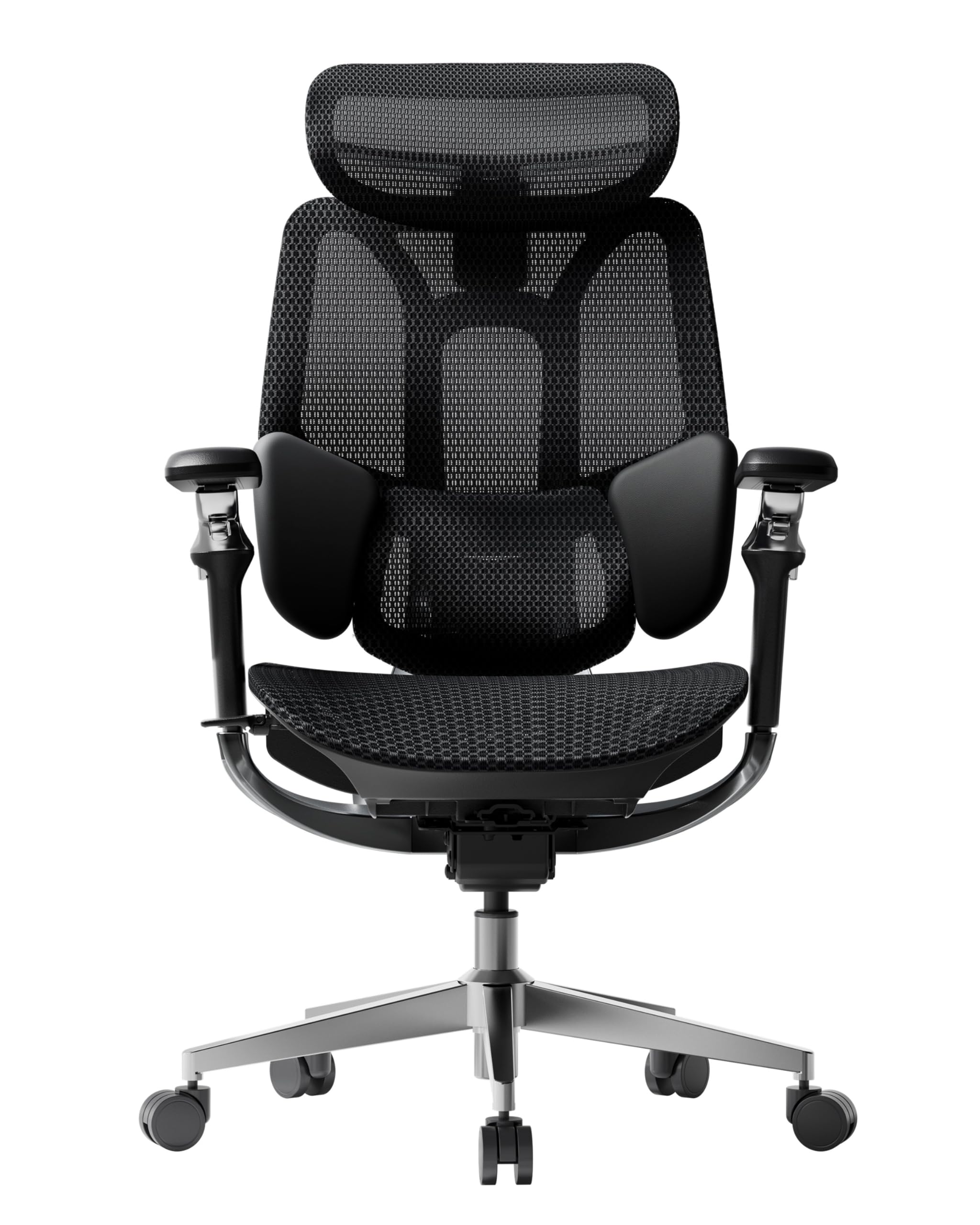
1,000+ ratings
Read Amazon ReviewsHbada E3 Pro
The Hbada E3 Pro suits desk workers who want extensive lumbar, headrest and armrest adjustment, plus room to recline between tasks.
- Three-zone floating lumbar support with pivoting side wings that move from 40 to 80 degrees and 60 mm of vertical adjustment.
- Dual-axis headrest with 70 mm of depth movement, 40 mm of height movement and 70 degrees of rotation.
- Recline positions are described at 105, 115, 130 and up to 140 degrees, with gravity-sensing tilt tension.
- High-elasticity mesh is used for flexible support and airflow; the mechanical armrests rotate in two 360-degree axes and fold by 39 degrees.

Pros
- The lumbar system offers both vertical positioning and adjustable side-wing angles.
- Headrest movement is detailed across depth, height and rotation, which can help buyers fine-tune neck support.
Consider before buying
- Its many adjustment points may take time to set up and are useful only if they align with the buyer's body and working habits.
- A 300-pound maximum weight recommendation rules it out for users whose needs exceed that limit.
Read the full review summary
The Hbada E3 Pro’s distinctive idea is to combine a three-zone floating lumbar system with broad adjustment elsewhere.
The lumbar support can move vertically by 60 mm, and its side wings pivot from 40 to 80 degrees; the backrest adjusts by 80 mm and seat depth by 50 mm.
These settings give buyers meaningful fit options to explore rather than relying on a single fixed posture.
Its recline reaches up to 140 degrees, with working and resting positions described at 105, 115, 130 and 140 degrees. A 4D dual-axis headrest and unusually flexible armrests add further positioning choices.
The stated fit range is 5 ft 1 in to 6 ft 5 in, and the chair has a 300-pound maximum weight recommendation.
It is most compelling for someone who will take time to adjust each contact point; buyers who prefer a simple chair may not use much of that versatility.
The buying factors
Hbada E3 Pro Scorecard
Editorial scores reflect listed features and buyer fit; they are not laboratory measurements or customer ratings.
Lumbar adjustability
The three-zone support combines pivoting lateral wings with 60 mm of vertical movement, offering several ways to position it.
Headrest flexibility
The dual-axis design provides 70 mm of depth adjustment, 40 mm of height adjustment and 70 degrees of rotation.
Recline range
Four described positions extend up to 140 degrees, covering work and more relaxed postures.
Armrest positioning
Dual 360-degree rotation and 39-degree folding provide considerable scope for changing arm support.
Fit range
The stated height range is broad, and backrest, lumbar and seat depth adjustments offer additional fit tuning.
Materials and airflow
High-elasticity mesh is used for flexible support and airflow, though comfort remains a personal fit question.
Weight capacity
The chair is rated for up to 300 pounds, a useful limit to check against the intended user's needs.
Key Features and Specifications of Hbada E3 Pro
- Three-zone floating lumbar support with pivoting side wings that move from 40 to 80 degrees and 60 mm of vertical adjustment.
- Dual-axis headrest with 70 mm of depth movement, 40 mm of height movement and 70 degrees of rotation.
- Recline positions are described at 105, 115, 130 and up to 140 degrees, with gravity-sensing tilt tension.
- High-elasticity mesh is used for flexible support and airflow; the mechanical armrests rotate in two 360-degree axes and fold by 39 degrees.
- Fit adjustments include 80 mm of backrest movement and 50 mm of seat-depth movement; the stated user-height range is 5 ft 1 in to 6 ft 5 in.
- The chair has a maximum weight recommendation of 300 pounds and a listed weight of 40 pounds. Its gas cylinder is SGS-certified Class 4, and the design is described as BIFMA-compliant.
Pros and Cons of Hbada E3 Pro
Pros
- The lumbar system offers both vertical positioning and adjustable side-wing angles.
- Headrest movement is detailed across depth, height and rotation, which can help buyers fine-tune neck support.
- The recline settings cover upright work and more relaxed positions, with weight-responsive tilt tension.
- The mesh construction and highly movable armrests provide options for airflow and changing arm posture.
Consider before buying
- Its many adjustment points may take time to set up and are useful only if they align with the buyer's body and working habits.
- A 300-pound maximum weight recommendation rules it out for users whose needs exceed that limit.
- The listed overall dimensions are 27.5 inches deep by 27.5 inches wide by 40 inches high, so check desk clearance and available room before choosing it.
Who Should Buy Hbada E3 Pro?
Good fit
Consider the Hbada E3 Pro if you want an office chair that can be tuned at the lower back, head, arms and seat.
The stated height range of 5 ft 1 in to 6 ft 5 in gives a broad starting point, while the adjustable backrest and seat depth let you refine where the support meets your body.
Before buying, compare the seat-depth range and chair dimensions with your preferred sitting position and workspace.
It is particularly worth considering if you change posture through the day. The described positions reach up to 140 degrees, and the gravity-sensing mechanism is intended to adjust tilt tension to body weight.
If possible, try the lumbar wings, headrest and armrests in the positions you expect to use; adjustability is only valuable when the resulting contact points feel right.
The mesh and armrest design also suit people who want air to move through the chair and like to reposition their elbows for different tasks.
Treat the listed certifications and weight limit as practical selection details: confirm that the 300-pound maximum and the stated fit dimensions meet your requirements.
Who should skip it
Skip it if you want a straightforward chair with very few adjustments to manage. The E3 Pro’s many movement options are central to its design, and they may be unnecessary if you prefer a fixed upright setup.
Choose another fit if you need a chair rated above 300 pounds, or if a 27.5-inch-wide base and the listed dimensions do not suit your available space. Check your desk height and clearance before committing.
How the Hbada E3 Pro’s adjustments shape daily use
Lumbar support that can be positioned
The three-zone lumbar assembly combines vertically adjustable support with side wings that pivot from 40 to 80 degrees. That gives buyers distinct settings to test as they sit upright, lean toward a screen or recline.
Look for contact across the lower back without pressure from the wings; the ideal angle depends on your posture and body shape.
Head, back and seat fit
Headrest depth, height and rotation adjustments let you move the support toward the neck rather than relying on one fixed position.
The backrest’s 80 mm of adjustment and seat-depth movement of 50 mm add ways to align the chair with torso and leg length.
Use the stated 5 ft 1 in to 6 ft 5 in range as an initial guide, then check that your feet rest comfortably and the seat edge does not press uncomfortably behind your knees.
Recline for changing tasks
The chair describes four recline positions from 105 degrees to as much as 140 degrees.
This range gives a buyer settings to compare for typing, reading and taking a break, while gravity-sensing tilt tension is intended to respond to body weight.
Confirm that the recline feels controlled at your preferred angle and that your desk setup remains practical when leaning back.
Armrests and mesh in context
The armrests rotate in two 360-degree axes and fold by 39 degrees, allowing a wide range of elbow positions. High-elasticity mesh is intended to provide flexible support and airflow.
Together, these features are most useful for people who move between tasks or postures; they are less decisive for someone who wants a consistently fixed arm position or a different seat feel.
Alternatives to Hbada E3 Pro
Home Office Desk Chairs alternative
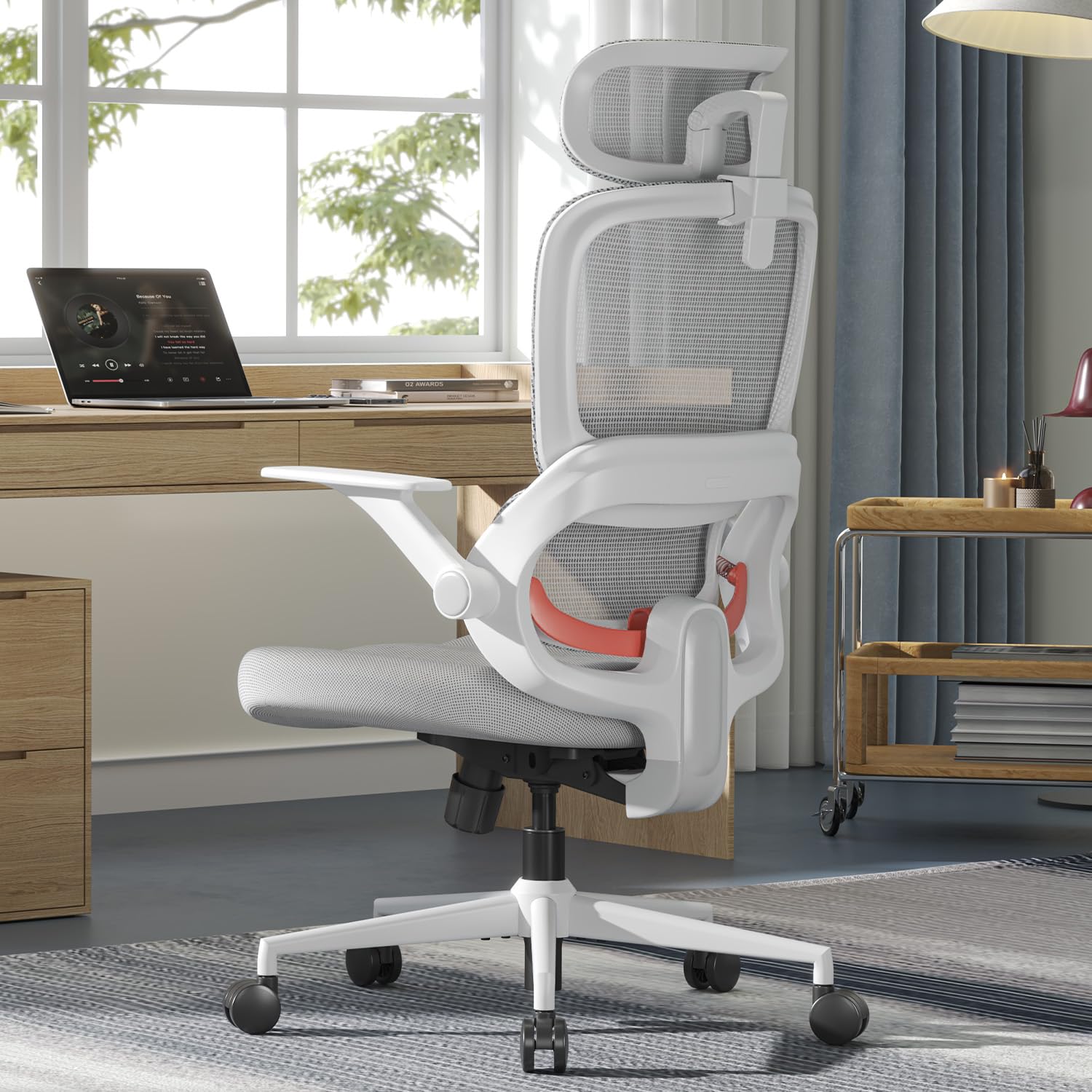
17,000+ ratings
Read Amazon ReviewsSIHOO B300 PRO
Compare the SIHOO B300 PRO if independent backrest-height adjustment and a four-way spring-assisted lumbar system are priorities.
The Hbada E3 Pro gives a clear stated height range and describes specific headrest movement and recline positions, which may be easier to compare against your fit needs.
- The SIHOO B300 PRO describes a spring-assisted four-way lumbar system, an independently height-adjustable backrest, adjustable seat depth, weight-sensing recline and six-direction armrests.
- Its listed maximum weight is not included in the supplied product description.
- The Hbada E3 Pro combines adjustable lumbar wings and a headrest with recline up to 140 degrees, while its stated fit range spans 5 ft 1 in to 6 ft 5 in.
Home Office Desk Chairs alternative
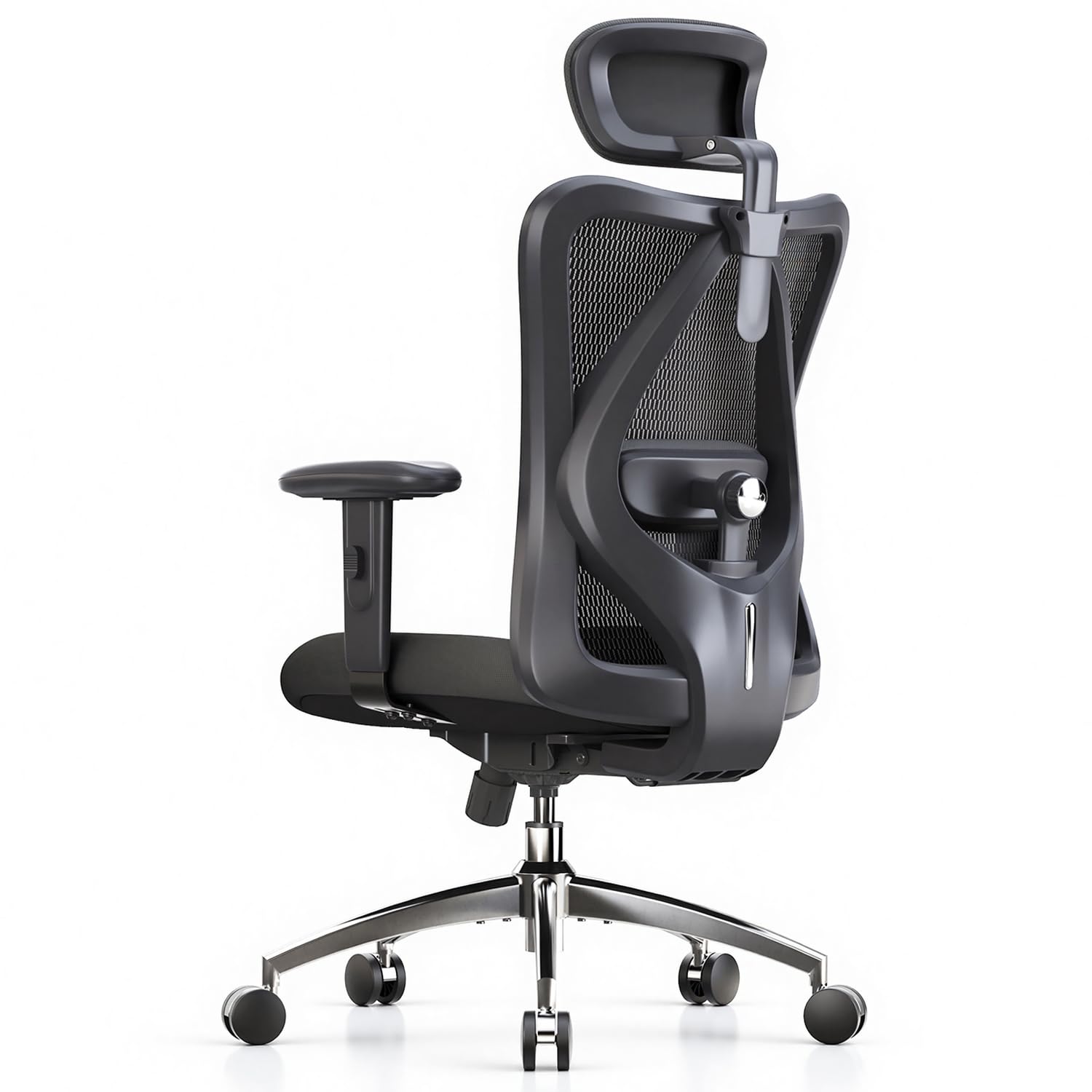
17,000+ ratings
Read Amazon ReviewsSIHOO M18
The SIHOO M18 may be a better fit if its narrower stated height range matches you and you prefer a simpler adjustment set with a higher listed weight capacity.
Consider the Hbada E3 Pro if its wider stated height range and more extensive headrest, lumbar and armrest positioning are useful to your routine.
- The SIHOO M18 describes adjustable seat height, headrest, lumbar and back support, a mesh back, 2D armrests and a tilt lock.
- Its stated user-height range is 5 ft 6 in to 6 ft 2 in, and its maximum supported weight is 330 pounds.
- The Hbada E3 Pro focuses on extensive adjustability, including moveable lumbar wings, a multi-axis headrest, deeply rotating armrests and recline up to 140 degrees.
Is Hbada E3 Pro Worth It?
The Hbada E3 Pro is worth considering for buyers who want a mesh office chair with substantial control over lumbar, head, arm and seat positioning.
Its up-to-140-degree recline and detailed adjustment ranges make it especially relevant for people who alternate between focused desk work and more relaxed postures.
Check the 300-pound limit, listed dimensions and stated user-height range against your needs, and allow time to set the adjustments to your body.
If that fit works and you will use the extra movement options, the E3 Pro presents a well-equipped choice; if you want fewer adjustments or need a higher weight rating, compare other chairs before deciding.
Your review at a glance
1,000+ ratings
Read Amazon ReviewsHbada E3 Pro
The Hbada E3 Pro suits desk workers who want extensive lumbar, headrest and armrest adjustment, plus room to recline between tasks.
- Three-zone floating lumbar support with pivoting side wings that move from 40 to 80 degrees and 60 mm of vertical adjustment.
- Dual-axis headrest with 70 mm of depth movement, 40 mm of height movement and 70 degrees of rotation.
- Recline positions are described at 105, 115, 130 and up to 140 degrees, with gravity-sensing tilt tension.
- High-elasticity mesh is used for flexible support and airflow; the mechanical armrests rotate in two 360-degree axes and fold by 39 degrees.